
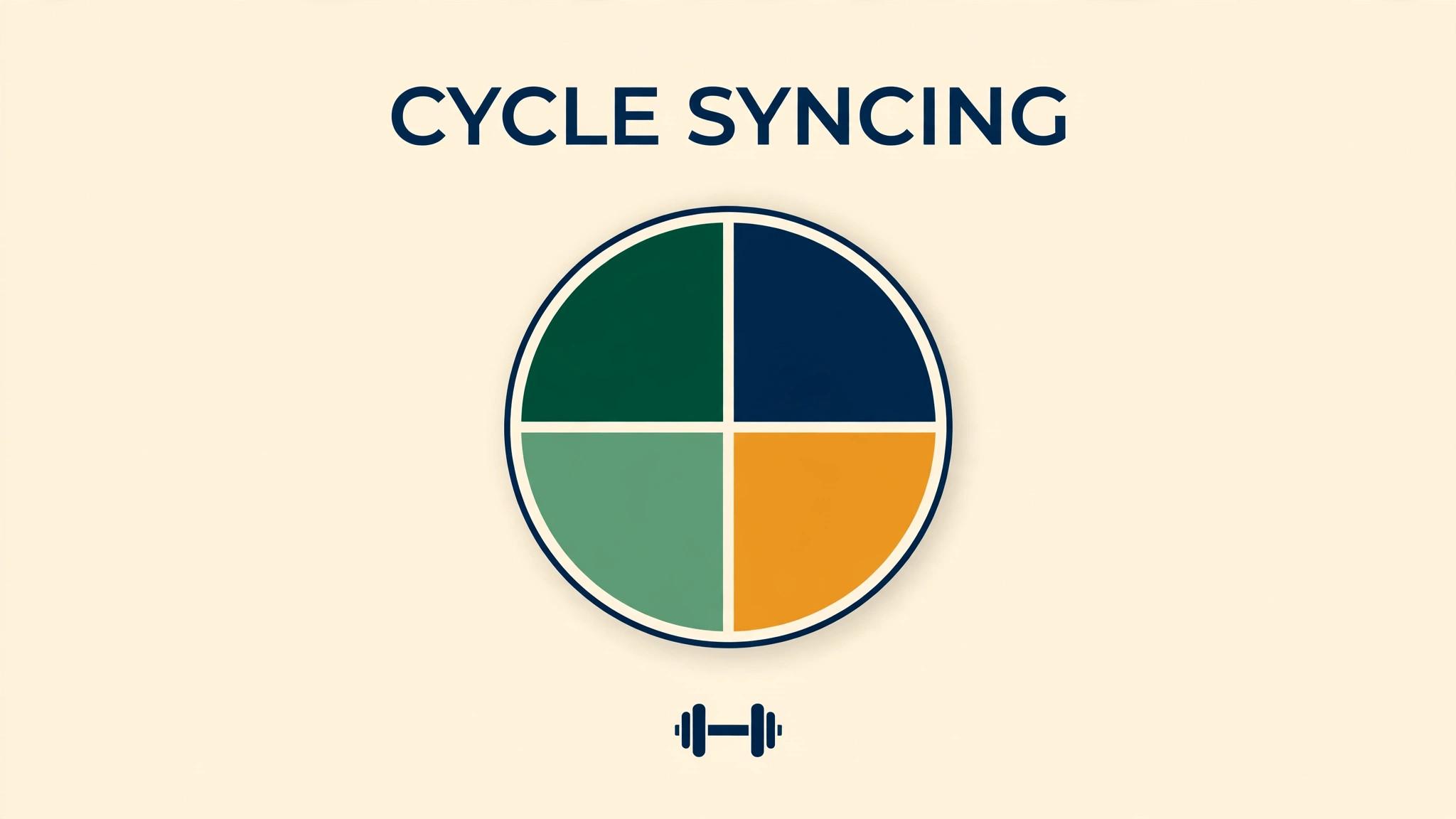
Featured image: custom illustration by Free Fitness Calculators.
Cycle syncing workouts means adjusting your training intensity to match the four phases of your menstrual cycle: gentler movement during your period, building up as estrogen rises, hardest training around ovulation, and easing off in the luteal phase. It works best as a self-awareness tool, not a rigid rule — large reviews find only small, inconsistent effects of cycle phase on measured performance.
Have you ever noticed your energy levels change from one week to the next? Some days you crush your gym session. Other days a simple walk feels exhausting. This is completely normal and it comes down to hormones. If you want to optimize your fitness routine, you might want to try cycle syncing workouts. This method matches your daily movement to the natural fluctuations in your body. It can help you train more effectively without feeling burnt out.
What is cycle syncing fitness
Hormones change throughout the month. Estrogen and progesterone rise and fall in a predictable pattern. These shifts impact your metabolism and muscle recovery. Syncing exercise to menstrual cycle phases means you adjust your workout intensity to match these hormonal changes.
Instead of doing the same high intensity interval training every single day, you listen to your body. You push hard when estrogen gives you a natural boost. You focus on recovery when progesterone slows you down. A proper cycle syncing workout chart gives you a roadmap for when to rest and when to sprint.
One honest caveat: the direct evidence for phase-based training is limited. A 2020 systematic review and meta-analysis of 78 studies found exercise performance might be only trivially lower in the early follicular phase than in other phases, on mostly low-quality evidence, and concluded that general guidelines across the cycle cannot be formed. A 2023 umbrella review reached a similar conclusion for strength training, calling phase-based resistance programming "not an evidence-based approach". So treat the phases below as a flexible starting point based on how you feel, not a prescription — your own tracked patterns matter more than any template.
Caption: Matching your movement to your monthly rhythm helps prevent burnout and supports better energy.
Why you should sync exercise with menstrual cycle
Women have unique physiology. For decades, sports research focused entirely on male athletes. Men have a hormonal cycle that resets every 24 hours. Their testosterone peaks in the morning and drops at night. This makes doing the same workout routine every single day very easy for them.
Women operate on a longer timeline. A female cycle takes roughly a full month to complete. When you try to force a daily 24 hour routine onto a 28 day hormonal cycle, you run into trouble. You might experience excess fatigue or stalled progress.
By choosing workouts for cycle syncing, you aim to give your body what it needs, when it needs it. Rising estrogen around ovulation may increase ligament laxity, which some researchers link to injury risk, although the evidence is inconclusive — good form and a proper warm-up matter in every phase. Many women also notice improvements in mood and focus. If you want to track your cardiovascular fitness over time, using a VO2 max calculator can show you how your endurance improves once you start training with your hormones instead of against them.
Your cycle syncing workout plan
A standard cycle lasts roughly 28 days. But every body is different. To create a solid cycle syncing workout schedule, you need to understand the four main phases. Here is how you can structure your weekly routine.
Menstrual phase
This phase starts on the first day of your period. Your estrogen and progesterone levels are at their lowest point. You'll likely feel tired. Your body is losing blood and shedding the uterine lining.
This is not the time for heavy squats or marathon prep. Focus on rest and gentle movement. Cycle syncing exercise during this phase should include yoga and light walking. Foam rolling is also a great choice. Prioritize your recovery and keep your heart rate low. Taking a few days completely off from the gym is a smart move if your body asks for it.
Follicular phase
As your period ends, your body prepares to release an egg. Estrogen levels start to climb. This hormone is linked to higher energy and pain tolerance, and many women feel more motivated to train.
This is the ideal time to build endurance. Try running or cycling. You can also start adding more resistance training back into your routine. If you use a running pace calculator, this is the phase where you might see your speed naturally improve. Estrogen may make your ligaments slightly looser, so you need to pay close attention to your form to avoid joint injuries. Ensure your squats and lunges are technically sound before pushing the tempo.
Ovulatory phase
Ovulation usually happens around the middle of your cycle. Estrogen peaks and testosterone gets a quick surge. Many women feel strong and energetic here — often the best window for harder sessions.
Working out in sync with menstrual cycle peaks means taking advantage of this energy. Go for heavy lifting or boot camp classes. Spin classes and sprint intervals are excellent choices. You have the stamina to push your limits right now. This is often when training feels easiest and most productive.
Luteal phase
After ovulation, the luteal phase begins. Progesterone takes over. This hormone has a calming effect, but it can also make you feel sluggish. Your core body temperature rises slightly.
During the first half of this phase, you can still handle moderate strength training. As you get closer to your period, you should scale back. Switch to Pilates or swimming. Cycle syncing fitness is all about listening to these subtle shifts. If you feel tired, don't force a tough workout. Your body temperature is higher now and you may sweat more easily. Hydration becomes critical during these weeks, so drink plenty of water.
Caption: Adjust your lifting intensity and rep ranges as your hormone levels shift throughout the month.
Cycle syncing weight lifting
Many women wonder how to approach strength training. Cycle syncing weight lifting doesn't mean you have to stop lifting heavy altogether. It just means you change your rep ranges and loads depending on the week.
During your follicular and ovulatory phases, you may feel up to pushing for personal records. Lift heavier weights for fewer reps. Some research suggests recovery from muscle damage may be faster when estrogen is high. You can push for that heavier kettlebell or load up the barbell.
When you reach your luteal phase, switch your focus. Decrease the weight and increase your repetitions. Focus on form and mobility rather than maximum strength. If you track your stats using a body fat calculator or a TDEE calculator to lose weight, you might notice your caloric needs increase slightly during the luteal phase. Resting metabolism does rise a little after ovulation — a 2020 meta-analysis found a small increase, and newer studies suggest it may be only a few dozen extra calories a day — so a small bump in appetite before your period is normal, not a failure of willpower.
Cycle syncing food and exercise
Movement is only half the equation. Nutrition plays a massive role in how you feel. Cycle syncing food and exercise together gives you the best chance of feeling good through the month.
During your menstrual phase, eat warm and comforting foods. Soups and stews are great. Make sure you get plenty of iron to replenish what you lose. Beef and leafy greens are excellent choices. Hydration is essential here to help combat bloating.
In the follicular and ovulatory phases, your body processes carbohydrates efficiently. Eat fresh vegetables and lean proteins. If you use a protein intake calculator, you'll see roughly how much you need to support those heavy ovulatory workouts. Your body is actively building muscle, so feed it accordingly.
During the luteal phase, your blood sugar becomes more sensitive. Cravings usually hit hard here. Focus on complex carbs like sweet potatoes and oats to keep your energy stable. Avoid massive sugar spikes because your body is already prone to mood swings during this time.
What about cycle syncing workouts on birth control
This is a very common question. Can you do cycle syncing workouts on birth control at all? The answer depends entirely on the type of contraception you use.
Hormonal birth control pills suppress your natural hormone fluctuations. They stop ovulation from happening entirely. Because your hormones are kept at a steady synthetic level, you do not experience the same peaks and valleys. In this case, a strict cycle syncing exercise chart might not apply to your physiology.
However, you can still listen to your body. Even on the pill, you might feel more tired during your placebo week or withdrawal bleed. Scale back when you feel fatigued. If you use a non hormonal copper option, your natural cycle continues as normal. You can easily follow the standard four phase guidelines.
Sync workouts to cycle phases smoothly
You don't need to overhaul your entire life overnight. Start by tracking your morning energy levels. Write down how you feel during different workouts. Over time, you will start to notice obvious patterns.
Workout cycle syncing is simply a tool to help you work with your physiology. Some months you might stick to the plan closely. Other months, life gets in the way. Do what feels right for your body on any given day. You don't have to be rigid. The goal is to feel better and get stronger without fighting against your own biology.
If your periods are very irregular, extremely painful, or missing altogether, talk to your doctor before building a training plan around your cycle — those symptoms deserve a medical check, not just a workout adjustment.