
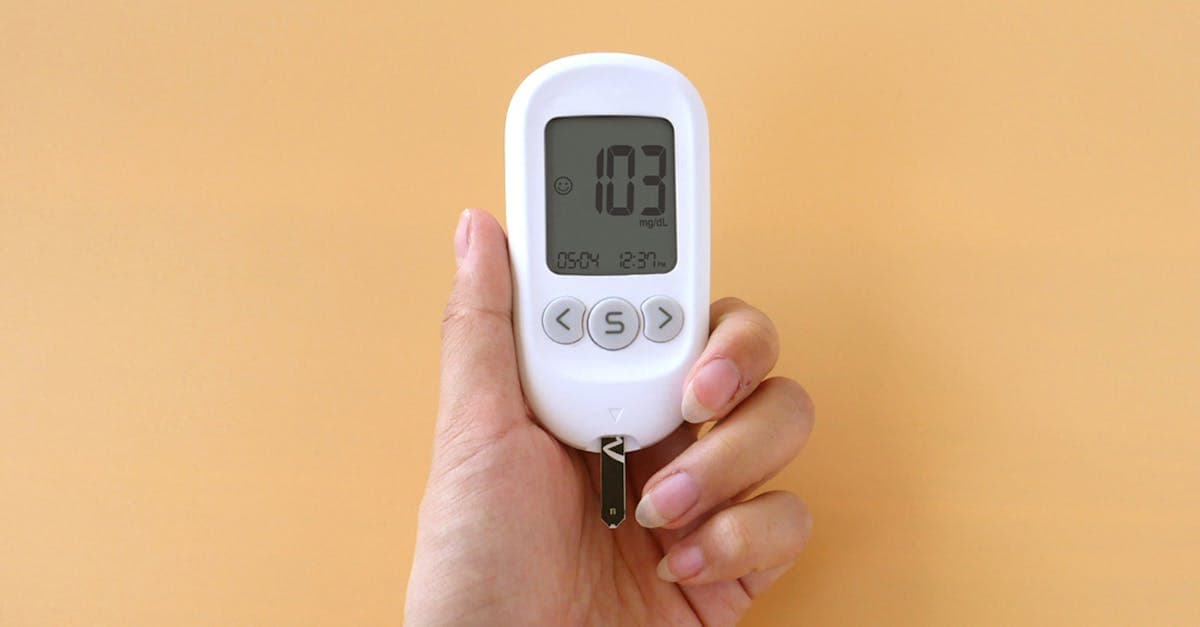
Clients sit in my office every week frustrated by their lack of progress. They eat clean foods. They exercise hard. But the scale refuses to move. When I ask them how many calories their body burns at rest they usually just shrug. They guess.
Guessing your metabolism is a massive mistake. I have coached hundreds of people through stubborn fat loss plateaus. The very first thing we do is stop guessing and start measuring.
Three years ago I spent months testing clinical laboratory equipment against simple home methods. I wanted to see if normal people could get accurate metabolic data without spending hundreds of dollars on a medical test.
You know what? You absolutely can. You do not need a fancy laboratory. Let me show you exactly how to measure your resting metabolic rate at home and what to do with that data.
Understanding Your Resting Metabolic Rate
We need to clear up some basic biology first. Resting Metabolic Rate is the total number of calories your body burns while completely at rest.
Think about lying in bed all day doing absolutely nothing. Your body still needs energy to keep your heart beating. Your lungs need energy to breathe. Your brain needs energy to function. This baseline requirement is your RMR.
You will also hear people talk about Basal Metabolic Rate. BMR and RMR are incredibly similar. BMR requires a strict fasting period and a clinical setting to measure perfectly. RMR is much more realistic for everyday people to track. For most fitness goals you can use the two terms interchangeably.
If you want a quick baseline right now you can run your numbers through our BMR Calculator. This gives you an immediate mathematical starting point.

Photo by Lisa Fotios from Pexels
Caption: Tracking your daily numbers is the only way to know what your metabolism is actually doing.
Why You Must Track This Number
Your metabolism changes over time. When you lose body fat your body gets smaller. A smaller body requires less energy to exist.
If you use the same calorie target for six months your progress will eventually stall. Your body adapts to the new lower weight. I talk about this survival mechanism extensively in my personal guide on fixing metabolic health.
By measuring your RMR you know exactly when your metabolism shifts. You can adjust your food intake before you hit a frustrating plateau.
Method One: Use the Best Mathematical Formulas
The easiest way to measure your resting metabolic rate at home is through validated mathematical equations.
The fitness industry has used dozens of formulas over the decades. The Harris Benedict equation is very famous but it often overestimates how many calories you burn.
When I build nutrition plans for my clients I rely almost exclusively on the Mifflin St Jeor equation. The Journal of the American Dietetic Association published a massive review in 2005 comparing all the popular formulas. They proved that the Mifflin St Jeor equation is the most accurate formula for both normal weight and obese individuals.
To use this formula you just need your age, your height in centimeters, and your current weight in kilograms. You can calculate this by hand or you can simply use the free calculators on this website to do the math for you.
Method Two: Wearable Devices and Breath Trackers
Technology moves fast. Several companies now sell small devices that claim to measure your exact resting metabolism using your breath.
I bought a few of these devices to test their accuracy. You breathe into a small tube every morning. The device measures the carbon dioxide you exhale. It then tells you if your body is running on fat or carbohydrates.
Honestly? They are interesting but totally unnecessary.
One of my clients became obsessed with his breath tracker. He stressed over every single morning reading. The stress raised his cortisol levels and actually stalled his fat loss. Devices provide neat clues. But a piece of plastic cannot replace simple consistency. You can get perfectly accurate numbers without buying expensive hardware.

Photo by Felicity Tai from Pexels
Caption: A basic kitchen scale is the most powerful tool you can own for tracking metabolic data.
The Ultimate At Home Test Protocol
If you want the absolute most accurate RMR measurement without visiting a doctor you just need two things. You need a digital body weight scale and a digital kitchen food scale.
I use this exact protocol with my advanced coaching clients. It takes two weeks.
Step One: Eat Normally
For fourteen days you must track every single thing you eat and drink. You must use a kitchen scale to weigh your food. Do not guess the portions. Track the cooking oil. Track the cream in your coffee. Be relentlessly accurate.
Step Two: Weigh Yourself Daily
Every morning wake up and use the bathroom. Step on the scale before you eat or drink anything. Write that number down. Your weight will fluctuate daily based on water retention. That is completely normal.
Step Three: Do the Math
After fourteen days look at your data. Find your average daily calorie intake. Then look at your body weight trend.
Did your average weight stay exactly the same? Congratulations. Your average daily calorie intake matches your Total Daily Energy Expenditure. You can read more about how this specific energy balance works in our complete TDEE calculator guide.
If you gained weight you are eating above your maintenance level. If you lost weight you are eating below it.
Step Four: Find Your RMR
Take your maintenance calorie number. Multiply it by zero point seven. For most people their resting metabolism makes up roughly seventy percent of their total daily burn. This simple math gives you an incredibly accurate real world RMR tailored to your specific body.
Improving Your Resting Metabolism
Once you know your baseline number you might want to increase it.
The absolute best way to increase your RMR is by building muscle. Muscle tissue requires significant energy to maintain. Fat tissue requires almost nothing. When you lift weights and add lean mass your body burns more calories while you sleep.
I highly recommend reading our body composition measurement guide to track your muscle growth properly. A heavier body with more muscle is a healthier body with a raging metabolism.
Stop guessing your numbers. Take two weeks to track your food and your weight accurately. Find your real resting metabolic rate. Once you have the data you hold the power to change your body forever.